
English| EUR
Suggested for you
More currencies
Choose a language
Travellers arrive in the Basque Country expecting a restaurant and find a counter instead. This what is pintxos san sebastian guide explains the format — small plates bought one at a time, bar by bar, across the Parte Vieja. Read on for the plain answer, the context behind it, and what the format asks of you.
Quick answer
A pintxo is a single-serving Basque bar snack, and there is no entrance fee — 0 EUR — because pintxos are food items purchased individually at various bars and restaurants. The bars sit in Parte Vieja (Old Town), San Sebastián, Spain, and stay accessible around the clock, though individual kitchens set their own service times.
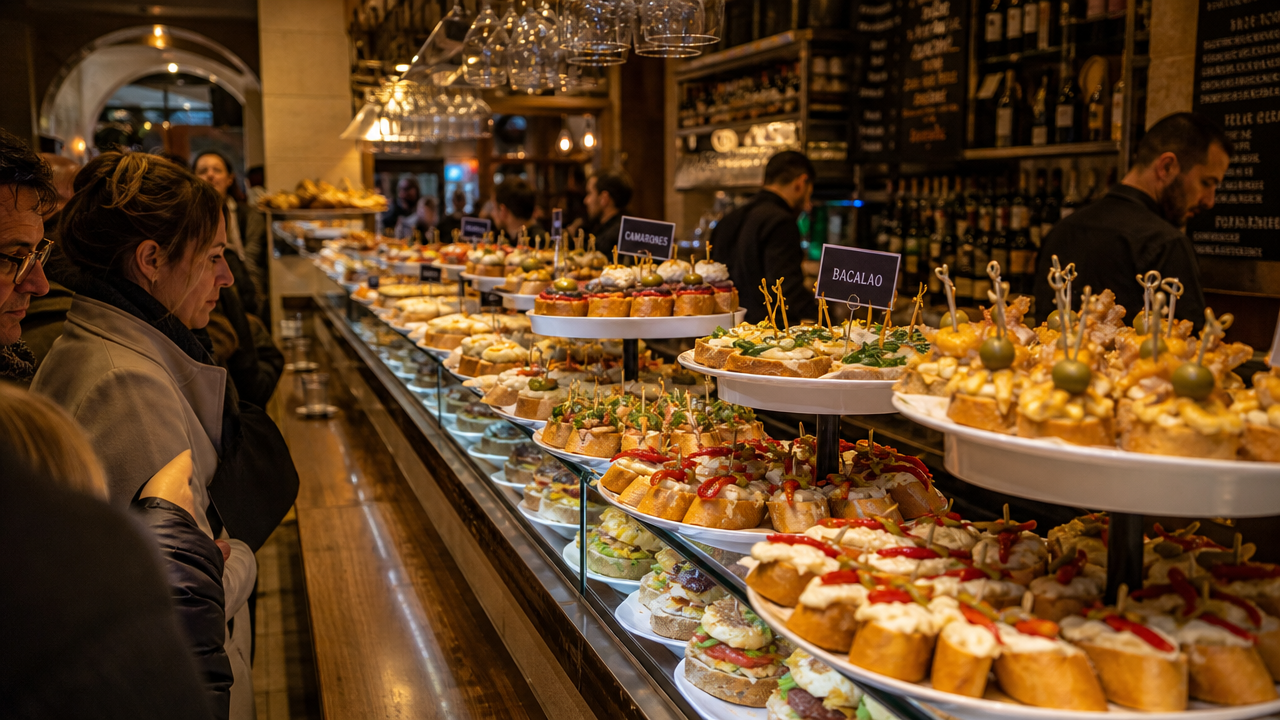
The word comes from pinchar, to pierce: the original pintxo was a cocktail stick spearing an olive, an anchovy and a guindilla pepper, a combination Basque bars still call the Gilda. That skewer explains the entire format. A pintxo is one bite, or two, built to be eaten standing, paid for at the end, and followed immediately by a walk to the next bar. This is what is pintxos san sebastian describes at its root — not a meal, but a sequence. The geography is compact. Almost everything worth knowing happens in Parte Vieja, the Old Town wedged between Monte Urgull and the Urumea river, where Calle 31 de Agosto, Calle Fermín Calbetón and the Plaza de la Constitución carry a density of bars unusual even by Spanish standards. Counters are stacked with cold pintxos — bacalao, tortilla, txangurro, jamón on bread — while the kitchen behind sends out hot plates ordered by name from a chalkboard. The drink of the region is txakoli, a sharp young white poured from a height into a wide glass, or a zurito, a small beer sized so it stays cold before the next stop. Sidrerías on the city's edge run a separate tradition again. La Concha and the Gros district have their own clusters, quieter and often better value than the Old Town core. What travellers usually get wrong is the pacing. Anyone researching san sebastián pintxos bars for the first time tends to plan a single long dinner in one place, which is the opposite of how the city eats. Locals order one or two items, one drink, then move — the txikiteo, a crawl by design. Three or four bars in an evening is normal; eight is not unusual. Because nothing is booked and nothing is ticketed, the constraint is not availability but crowding, and the counters look entirely different at 12:30 than they do at 21:00. Use that flexibility rather than fighting it. Treat the Old Town as a single dispersed dining room, pick a rough route, and let the crowd density decide where you stop. Guided pintxo crawls exist for travellers who would rather have the ordering and the Basque menu names handled for them, and the city's tourist board at sansebastianturismoa.eus keeps current listings. Understanding what is pintxos san sebastian means, in the end, is less about any single dish than about accepting that dinner here moves.
“A pintxo is not a meal but a sequence — one bite, one drink, then the walk to the next bar.”
Pintxos represent a fundamental pillar of Basque culinary culture, serving as both a social ritual and a sophisticated gastronomic experience. Unlike standard tapas, these small bites are deeply rooted in regional tradition and localized bar culture.
The word pintxo derives from the Spanish verb pinchar, meaning to pierce, referring to the toothpick traditionally used to fasten ingredients to bread. This practice emerged in the 1930s as a way to hold the components of the snack together.
The most iconic pintxo, known as the Gilda, consists of an olive, an anchovy, and a guindilla pepper skewered together. It was named after the 1946 film character played by Rita Hayworth because it is considered salty, spicy, and green.
While early pintxos were simple skewers, modern versions often use a slice of bread as a foundation for elaborate culinary preparations. This differentiates them from traditional tapas which may be served in small dishes without bread.
Pintxos are intended to be consumed while standing in a bar, facilitating a practice known as txikiteo. This involves moving from bar to bar to enjoy a single drink and one pintxo at each location.
The excellence of pintxos relies on the high quality of local Basque ingredients, such as Cantabrian anchovies, Idiazabal cheese, and seasonal vegetables. Bars pride themselves on sourcing these products from nearby producers to ensure freshness.
San Sebastián has evolved its pintxo culture to include high-end, chef-driven creations that rival formal restaurant plates. Many establishments now serve these innovative dishes warm, prepared to order, rather than just displaying them on the counter.
The best arrival window is 12:00–22:00, when bars are most active and provide the freshest selection of pintxos. Visiting during these peak lunch and dinner hours ensures you experience the most vibrant social atmosphere in the Parte Vieja.
Mild temperatures (15°C–20°C). Ideal for walking between bars in comfortable weather.
Warm temperatures (18°C–25°C). The city is at its busiest with lively outdoor bar scenes.
Cool temperatures (14°C–19°C). Consistent food quality and seasonal Basque ingredients are prevalent.
—
Bars are less congested than weekends, allowing for easier access to counter displays.
Verdict: Visit between Tuesday and Thursday during the 12:00–22:00 window in May or October for a balance of fresh food, social energy, and manageable crowd levels.
There is no centralized entry fee for pintxos in San Sebastián. Instead, visitors pay for food and drinks individually at each bar and restaurant visited.
Verdict: A typical adult pays for each item separately, with the final cost determined by the number of pintxos and drinks consumed.
This procedure walks you through a pintxo crawl in the Parte Vieja (Old Town), San Sebastián, from your first bar to your last, covering how to order, how to pay, and how to move on. Plan roughly two to three hours to cover four or five bars at an unhurried pace.
Head to the Parte Vieja (Old Town), San Sebastián, where the pintxo bars cluster within a few walkable streets. Most visitors arrive during the 12:00–22:00 window, when variety on the counters is freshest; check https://www.sansebastianturismoa.eus/en/ for current listings.
Walk in, ignore the apparent chaos, and work your way toward the bar itself rather than waiting to be seated. There is no host and no table service in most bars — standing at the counter is normal and expected.
Make eye contact and order clearly when your turn comes; do not queue in a line, as none forms. The common mistake is waiting quietly to be noticed, which can leave you standing for a long while.
Ask for a drink first, then one or two pintxos — either from the counter display or the hot list called out or chalked on a board. Ordering many at once defeats the point, since the crawl depends on trying a different specialty at each stop.
Cold pintxos are usually self-served onto a small plate; hot ones are made to order and brought out. Keep your used toothpicks or plate visible on the counter, since they are how staff tally what you owe.
Tell the bartender you are finished and pay at the counter for that bar only, in one go. Each bar is a separate transaction — no tab carries over to the next place.
Step outside and walk one or two streets over to the next bar rather than settling in. Two pintxos and one drink per stop is the rhythm that lets you reach four or five bars in an evening.
Pintxo bars in the Parte Vieja run on trust and speed, and locals notice when visitors break the rhythm. Knowing how the counter, the tab and the floor actually work keeps you welcome from one bar to the next.
Pintxo bars in the Parte Vieja operate throughout the week to accommodate visitors. These establishments maintain consistent service schedules across all seven days.
Everything you need to know about what is pintxos san sebastian
Pintxos are small, flavorful snacks typical of the Basque Country, often served on a slice of bread and held together with a toothpick. When researching what is pintxos San Sebastián, you will find they are a central part of the local culinary culture and social life. They are distinct from tapas because they are often larger, more complex, and deeply rooted in Basque tradition.
Pintxos are food items purchased individually at various bars and restaurants. There is no flat entrance fee; you simply pay for the items you select at each establishment. This allows you to explore multiple venues at your own pace.
The best arrival window for the most vibrant social atmosphere and freshest variety is 12:00–22:00. This encompasses both the lunch and dinner hours when the bars are most active. Arriving during these windows ensures you experience the peak density of food options.
Families are generally welcome in the lively bars of the Old Town, though venues can become crowded during peak times. It is helpful to navigate the streets early in the day or during off-peak hours if you are visiting with young children. The casual nature of these venues makes them accessible for many types of travelers.
It is customary to order your drink first and then select your pintxos from the counter or via the daily menu. Some locals prefer to move from bar to bar to try a signature item at each location rather than eating a full meal in one place. Always remember that what is pintxos San Sebastián is about moving and sharing the social space.
While you can freely wander into bars, joining a guided pintxos tour can provide deeper context on local culinary history and food traditions. These tours help navigate the busy atmosphere if you are unsure where to start. You do not need a ticket for public access, but organized experiences often require booking ahead to secure a spot.
The Parte Vieja, or Old Town, is the heart of the city's gastronomy and the prime location for a crawl. This historic district contains the highest density of traditional bars serving authentic Basque snacks. Exploring this area is essential for anyone asking what is pintxos San Sebastián.